

Dr. McIntyre and Dr. McDowall are the owners and clinic directors of Burlington Sports Therapy.
They often use chiropractic spinal adjustments as a treatment method, but it really depends on the presenting condition. Your experience at Burlington Sports Therapy will begin with an initial examination. Following this, Dr. McIntyre or Dr. McDowall will discuss with you the nature or your condition and whether or not spinal adjustments would be beneficial. They will also discuss with you the risks and benefits of this approach. Should chiropractic adjustments not suit your comfort level, they will suggest to you other treatment options.

COMMON QUESTIONS
If you are in the Burlington, Oakville, Hamilton and surrounding areas and are in need of Chiropractic Treatment, contact Burlington Sports Therapy today.
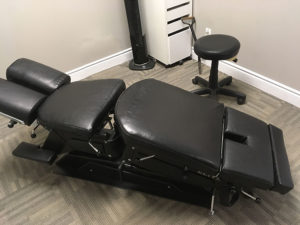
One of the spinal mobilization approaches used by our chiropractors at Burlington Sports Therapy is called flexion-distraction, using what is called a Cox table. Although there is an actual “Cox Method” to treatment, we just use the table as our tool for encouraging lumbar mobility. When using this table, the patient lies on their stomach while the practitioner holds the lumbar spine and pivots the bottom end of the table from side to side and up and down. The purpose is to improve the patient’s lumbar mobility without using a high-velocity thrust. Perhaps an easy way to understand the purpose, the flexion-distraction table allows the practitioner to gently encourage motion at each level of the lower back so that the patient’s spine moves more like an accordion and less like a door hinge.
Chiropractic treatment is often used to improve muscle and joint conditioning, which has an obvious effect on athletic performance. Chiropractic treatment helps to fine-tune athletes. It assists their muscle and joint function and can help reduce long term wear and tear on the muscles and joints. Chiropractic treatment can prevent injuries and speed up recovery time. Although most people select chiropractic care to treat their injuries, many athletes choose chiropractic to improve athletic performance. The treatment approach may be similar in both of these cases; a treatment plan should be outlined for every patient.
In the case of professional and elite athletes, chiropractors often work in conjunction with other health care professionals including medical doctors, sports medicine doctors, massage therapists, physiotherapists, acupuncturists and athletic therapists. At Burlington Sports Therapy our Burlington Chiropractors often collaborate with various nearby health professionals. If you are in the Burlington, Oakville, Hamilton and surrounding areas and are looking for Chiropractic Treatment, call our office today.
Chiropractors diagnose and treat injuries affecting the musculoskeletal system. That means, they treat injuries to the spine, pelvis, joints and muscles of the body. In a nutshell, they treat various physical injuries. It is a misconception that chiropractors only treat the spine. Chiropractors use various therapeutic modalities. The most common form of treatment provided by chiropractors involves manual therapy to the joints and soft tissues. An integral component of chiropractic care is the examination and diagnosis that occurs prior to treatment. Chiropractors are trained doctors with the specific ability to diagnose conditions related to the spine, pelvis, extremity joints and the nervous system.
Prior to being eligible for admission into Chiropractic College, students are required to complete a minimum of three years of university. The vast majority of chiropractic students have completed a four year University degree before entering Chiropractic College. The Canadian Memorial Chiropractic College curriculum consists of four years of full-time study, including a 12-month clinical internship.
Most Chiropractic curriculums include courses in anatomy, biochemistry, physiology, neurology, embryology, principles of chiropractic, radiology, immunology, microbiology, pathology, nutrition, and clinical sciences specifically relating to diagnosis.
Perhaps what really distinguishes Chiropractic education from most other health disciplines is the intensive training in Radiology. This area of study covers a range of topics from radiation biophysics and protection to clinical X-ray interpretation and diagnosis.
Radiology training in Chiropractic College consists of more than 360 contact hours followed by application during clinical internship. Chiropractic education also involves extensive hands-on clinical training under the supervision of highly-qualified faculty. This training includes clinical assessment, diagnosis, treatment, and referral protocols. The faculty members at both Canadian Chiropractic Colleges have diverse, highly qualified backgrounds. Faculty come from such disciplines as biological sciences, pathology, medicine and psychology as well as chiropractic.
The two Canadian Chiropractic Colleges have also formed relationships – both formal and informal – with various Universities in Canada.
One of the spinal mobilization approaches used by our chiropractors at Burlington Sports Therapy is called flexion-distraction, using what is called a Cox table. Although there is an actual “Cox Method” to treatment, we just use the table as our tool for encouraging lumbar mobility. When using this table, the patient lies on their stomach while the practitioner holds the lumbar spine and pivots the bottom end of the table from side to side and up and down. The purpose is to improve the patient’s lumbar mobility without using a high-velocity thrust. Perhaps an easy way to understand the purpose, the flexion-distraction table allows the practitioner to gently encourage motion at each level of the lower back so that the patient’s spine moves more like an accordion and less like a door hinge.
Many athletes use chiropractic care. At major sporting events like the Olympics, Chiropractors are an integral part of the core medical team. Additionally, professional sports organizations usually have a Chiropractor as part of the health team for players.
Chiropractic treatment is often used to improve muscle and joint conditioning, which has an obvious effect on athletic performance. Chiropractic treatment helps to fine-tune athletes. It assists their muscle and joint function and can help reduce long term wear and tear on the muscles and joints. Chiropractic treatment can prevent injuries and speed up recovery time. Although most people select chiropractic care to treat their injuries, many athletes choose chiropractic to improve athletic performance. The treatment approach may be similar in both of these cases; a treatment plan should be outlined for every patient.
In the case of professional and elite athletes, chiropractors often work in conjunction with other health care professionals including medical doctors, sports medicine doctors, massage therapists, physiotherapists, acupuncturists and athletic therapists. At Burlington Sports Therapy our Burlington Chiropractors often collaborate with various nearby health professionals. If you are in the Burlington, Oakville, Hamilton and surrounding areas and are looking for Chiropractic Treatment, call our office today.
If you are in the Burlington, Oakville, Hamilton and surrounding areas and are in need of Chiropractic Treatment, contact Burlington Sports Therapy today.
YOUR FIRST VISIT

Your Burlington Chiropractor at Burlington Sports Therapy will perform a proper health history and examination prior to treatment. This will usually require a minimum of 30 minutes. This may include questions about your personal and family medical history, major illnesses you have experienced, previous surgeries and current medications. Your chiropractor will ask you questions about your current condition and the steps you have taken to alleviate it.
It is a great idea to bring comfortable clothes and shoes for your visit to the chiropractor, but you may be asked to change into a gown to perform some tests. These tests may include a check of your blood pressure, pulse and breathing, a test of your reflexes, strength and sensations and an analysis of your posture.
At our Burlington Chiropractic Clinic, we often refer patients for X-rays to local medical X-ray facilities. Your chiropractic examination will include an analysis of your movement. Your chiropractor will evaluate how your spine moves and will identify areas of improper joint movement. Your initial examination will also involve orthopedic testing. These are tests in which the chiropractor will move different joints of your body in an effort to diagnose your condition. Following your examination, your chiropractor will make a diagnosis, prescribe a course of treatment, and once the matter of informed consent has been discussed, treatment usually commences.
Your chiropractor will refer you to an alternate practitioner should your condition be better treated by someone else. Our Burlington Chiropractors usually require 10 to 15 minutes for subsequent treatment visits. This duration will obviously depend on the type of treatment you require.
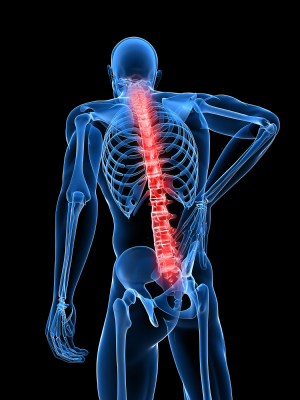
Do I need an x-ray for back pain?
When do you need an x-ray for back pain? This is a question I get asked on a regular basis. [...]
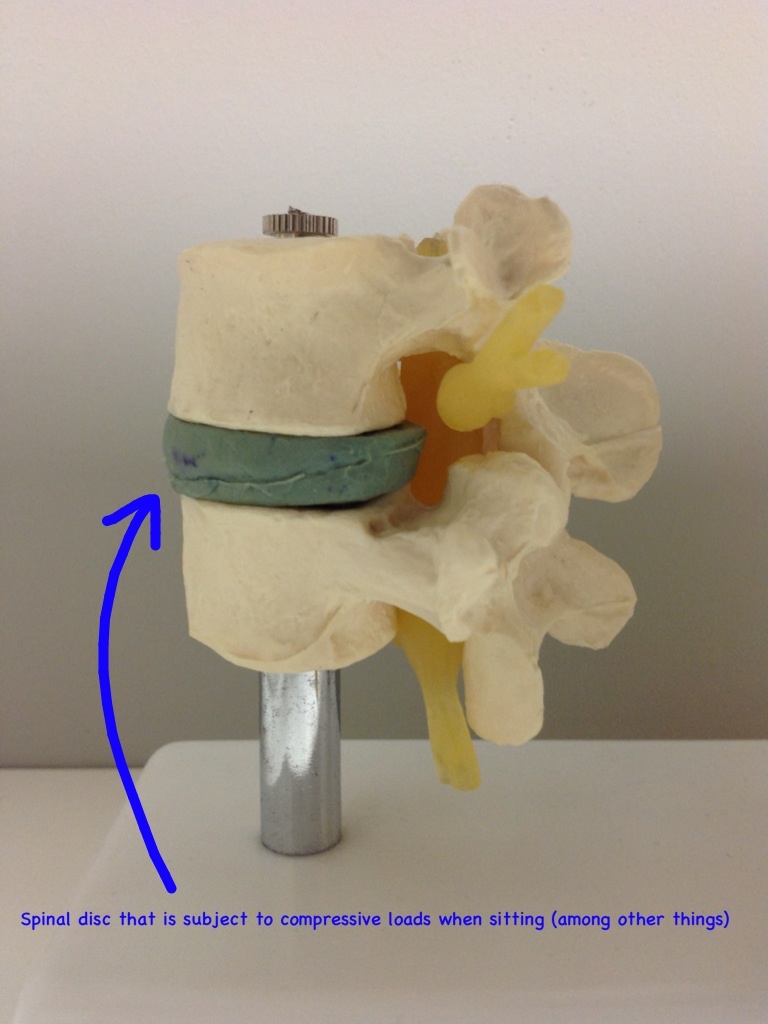
Back Pain and Neck Pain in Burlington
It seems that the longer I’m in practise, the more I appreciate the negative impact prolonged sitting can have on [...]
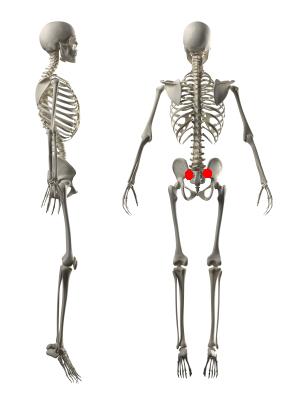
Ankylosing Spondylitis
Ankylosing spondylitis is an inflammatory condition that primarily targets the spine. It is characterized by pain, a progressive “stiffening” of [...]
Dr. Kevin McIntyre is an extremely knowledgeable Chiropractor. Due to this knowledge, he brings alternative methods of care to his patients. As a runner, this is critical for me when I need to ensure that my areas of improvement can’t be addressed with just one method. Graston, A.R.T., and Chiropractic care have worked wonders on my IT band, knee and neck issues. Due to the great service and results from the Dr. McIntyre, I transferred my care over to him permanently. I really feel like I am taken care of and my needs and concerns are listened too and addressed. Today I am healed and I continue with my therapy as preventative maintenance. I am thrilled with the service provided and I would strongly recommend Dr. McIntyre service to anyone.
Let us help you reach your
full potential
Contact us today to book an appointment